December 15 – St. Drostan

December 15, 2025

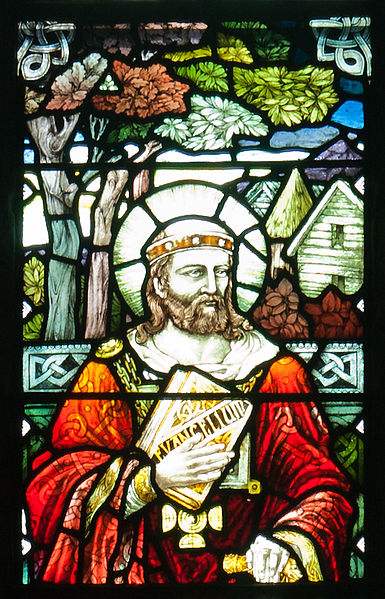
St. Drostan

(DRUSTAN, DUSTAN, THROSTAN)

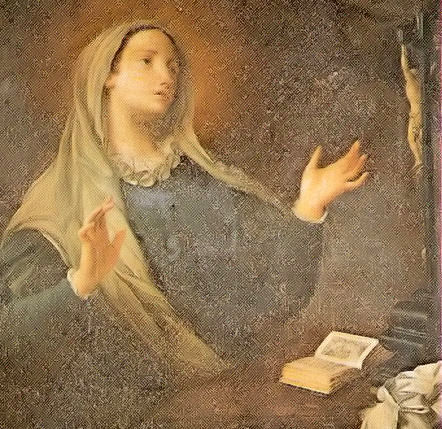
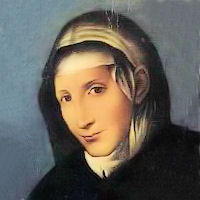
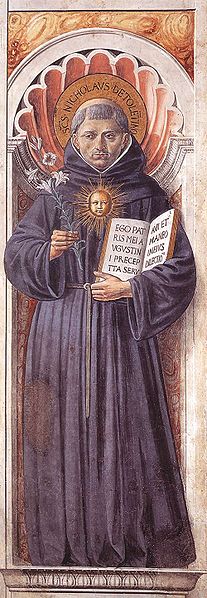
st drostanA Scottish abbot who flourished about a.d. 600. All that is known of him is found in the “Breviarium Aberdonense” and in the “Book of Deir”, a ninth-century MS. now in the University Library of Cambridge, but these two accounts do not agree in every particular. He appears to have belonged to the royal family of the Scoti, his father’s name being Cosgrach. Showing signs of a religious vocation he was entrusted at an early age to the care of St. Columba, who trained him and gave him the monastic habit. He accompanied that saint when he visited Aberdour (Aberdeen) in Buchan. The Pictish ruler of that country gave them the site of Deir, fourteen miles farther inland, where they established a monastery, and when St. Columba returned to Iona he left St. Drostan there as abbot of the new foundation. On the death of the Abbot of Dalquhongale (Holywood) some few years later, St. Drostan was chosen to succeed him. Afterwards, feeling called to a life of greater seclusion, he resigned his abbacy, went farther north, and became a hermit at Glenesk. Here his sanctity attracted the poor and needy, and many miracles are ascribed to him, including the restoration of sight to a priest named Symon. After his death his relics were transferred to Arberdour and honourably preserved there. The “Breviary of Aberdeen” celebrates his feast on 15 December. The monastery of Deir, which had fallen into decay, was rebuilt for Cistercian monks in 1213 and so continued until the Reformation.

Subscription15

DEMPSTER, Hist. Eccl. Gent. Scot. (Edinburgh, 1829); Breviarium Aberdonense (London, 1854); INNES, Scotland in the Middle Ages (Edinburgh, 1860); FORBES, Kalendar of Scottish Saints (Edinburgh, 1872); GAMMACK in Dict. of Christ. Biog. (London, 1877).

G. CYPRIAN ALSTON (Catholic Encyclopedia)

{ 0 comments }
St. Judicael Saint Judicael ap Hoel (c. 590 – 16 or 17 December 658) was the King of Domnonée and a Breton high king in the mid-seventh century.

According to Gregory of Tours, the Bretons were divided into various regna (subkingdoms) during the sixth century, of which Domnonée, Cornouaille, and Broweroch are the best known; they had been under Frankish suzerainty during the time of Clovis I. This they had thrown off by the time of Chilperic I, who subdued them and their chief Waroch II, at least in the east of Brittany. Guntram, Chilperic’s brother, retained his lordship over Waroch and the Brittani formed a Frankish tributary-vassal state through the reign of Dagobert I.

Saint Judicael presented Dagobert, King of the Franks.

Saint Judicael presented Dagobert, King of the Franks.

In the Chronicle of Fredegar, a Judicael is named as King of the Bretons at this time. It is highly likely that he was the Domnonian king of Breton tradition. This would indicate that Domnonee had at the time swallowed up Broweroch and Judicael had become a High King. This is probably the reason for his dealings with Dagobert and Eligius. In 635, Dagobert ordered Judicael to come to his palace at Clichy and renew fealty to the king, threatening to invade Brittany otherwise. The Breton king complied and arrived with gifts, but insulted Dagobert by refusing to eat at the royal table.

Statue of St. Judicael in the Paimpont, France, where St. Judicael founded Notre-Dame de Paimpont Abbey. Photo by Ex-Smith.

Statue of St. Judicael in the Paimpont, France, where St. Judicael founded Notre-Dame de Paimpont Abbey. Photo by Ex-Smith.

Around 640, he retired to the monastery of Saint John at Gwazel, not far from the monastery of Paimpont which he had founded. After his death, he was buried beside his abbot, Saint Méen, and declared a saint; his feast day is 16 December. He is also said to have been the father of Saints Judoc and Winnoc.

Subscription24

{ 0 comments }

Albuquerque, Afonzo de (also Dalboquerque), surnamed “the Great”, b. in Portugal, in 1453; d. at Goa, 16 December, 1515. He was second son of Gonzallo de Albuquerque, lord of Villaverde, and became attached to the person of the king of Portugal. He went to Otranto with Alphonso V in 1480, and made his first voyage to the far East in 1503, returning to Lisbon 1504. When Tristan de Cunha sailed for India in 1506, Albuquerque was one of his officers. He formed the plan to monopolize trade with East India for Portugal, by excluding from it both the Venetians and the Saracens, and therefore sought to make himself master of the Red Sea. For that purpose he seized the Island of Socotra and attacked Ormuz, landing 10 October, 1507, and raising fortifications.

Afonso began building the Fort of Our Lady of the Conception, on Hormuz Island, Iran.

The attack was repeated in the year following, also at Cochim in December. When the Viceroy of India, d’Almeida, returned to Portugal, 1509, Albuquerque was appointed in his place. In 1513, King Emmanuel calls him “protho-capitaneus noster”. Annoyed by constant hostilities of the people of Calicut, he destroyed the place on 4 January, 1510. To secure a permanent foothold on the coast of India, he took Goa in March, 1510, abandoning it two months afterwards, only to return in November, when he took the place again, and held it thereafter for the Portuguese. Once safely established on the eastern coast of what is generally comprised under the name of Dekkan, Albuquerque turned his attention to the organization of the colonies and to discoveries towards the farthest East. He took Malacca in July, 1511, and attempted to explore the Moluccas in the same year. In pursuance of his policy to prevent other nations from intercourse with India, he occupied a strong position at Aden, on the Red Sea, March, 1513, but about the same time the Turks had conquered Egypt and effectively barred access to the far East to all other nations except by sea.

Statue of Afonso de Albuquerque, symbolically standing on a stack of weapons, referencing his reply in Hormuz.

While Albuquerque was thus establishing Portuguese colonization in India on a firm footing, and planning advances beyond Eastern Asia, the Crown of Portugal was listening to intrigues to his prejudice. Still it may be that the state of his health, greatly impaired through climate and strain, induced King Emmanuel to provide for a successor. Albuquerque was manifestly broken down physically. So Lope Suarez was sent to supersede him. The news of what he considered an act of ingratitude prostrated him, and although King Emmanuel recommended, in forcible terms to his successor to pay special deference to the meritorious leader, expressing, at the same time regret at having removed him from his high position, Albuquerque pined and died at the entrance of Goa, 16 December, 1515. Fifty-one years later his remains were transported to Lisbon, where a more worthy resting place had been prepared for them. Among the distinguished leaders and administrators that sprang up in southern Europe at the end of the sixteenth century, Afonzo de Albuquerque holds a very prominent position.

The Conquest of Malacca, 1511.

His achievements, from a military standpoint, were more remarkable than any of the so-called conquerors of the New World; for he had to cope with adversaries armed very nearly like the Europeans, with hosts that were superior to any that were encountered by Cortez or Pizzaro, and had at his command forces hardly more numerous than those that achieved the conquest of Peru and Mexico. His enemies opposed him at sea, as well as on land, and they might, at any time, obtain succour from powerful Mohammedan states interlying between Europe and Asia. His only route for communication and relief was around the Cape of Good Hope. When, during the last five years of his life, he could at last turn to organization and administration, he proved himself a great man in this respect also. His religious zeal was not the less notable. He built churches in Goa and had Franciscans and a famous Dominican with him. The church of the Blessed Virgin at Goa, which he built, is called by Father Spellmann, S.J., “the cradle of Christianity, not only in India, but in all East Asia”. (Kirchenlexicon, V, s.v. Goa).

Perhaps the earliest mention of Albuquerque and his achievements in the Far East is due to King Emmanuel himself in his letter of “idus Junias”, 1513, Epistola Potentissimi Regis Portugalensis et Algarbiarum, etc., De Victoriis habitis in India et Malachia (Rome, 9 Aug., 1518), wherein the King calls him (perhaps a misprint) “Albiecherqe”. There are several editions, some without place or date; Joãn de Barros, Asia (second decade, Lisbon, 1553); Fernão Lopez de Castanheda, Historia do descubrimiento & conquista da India (Coimbra, 1552), II, III; Damião de Goes, Chronica do Serenissimo Senhor Rei d. Manuel (Second ed., Lisbon, 1749, by Reinerio Bocache). An important, but of necessity partial source is the work of his natural son (Albuquerque was never married) Braz, who took the name of Afonso the Younger, Commentarios do Grande Afonso Dalboquerque, capitan geral que foy das Indias Orientœs, etc. (First ed., Lisbon 1576, second ed. ibid., 1776), English tr. by Hakluyt Society, 1875–84. The commentaries of the great Afonso Dalboquerque, four vols.; Biographie universelle (Paris, 1854), I; Silva, Diccionario bibliografico portuguez (Lisbon, 1859), I.

Ad. F. Bandelier (Catholic Encyclopedia)

{ 0 comments }
December 17 – St. Olympias

December 15, 2025

St. OlympiasBorn 360-5; died 25 July, 408, probably at Nicomedia. This pious, charitable, and wealthy disciple of St. John Chrysostom came from an illustrious family in Constantinople. Her father (called by the sources Secundus or Selencus) was a “Count” of the empire; one of her ancestors, Ablabius, filled in 331 the consular office, and was also praetorian prefect of the East. As Olympias was not thirty years of age in 390, she cannot have been born before 361. Her parents died when she was quite young, and left her an immense fortune. In 384 or 385 she married Nebridius, Prefect of Constantinople. St. Gregory of Nazianzus, who had left Constantinople in 381, was invited to the wedding, but wrote a letter excusing his absence (Ep. cxciii, in P.G., XXXVI, 315), and sent the bride a poem (P.G., loc. cit., 1542 sqq.). Within a short time Nebridius died, and Olympias was left a childless widow. She steadfastly rejected all new proposals of marriage, determining to devote herself to the service of God and to works of charity. Nectarius, Bishop of Constantinople (381-97), consecrated her deaconess. On the death of her husband the emperor Subscription5had appointed the urban prefect administrator of her property, but in 391 (after the war against Maximus) restored her the administration of her large fortune. She built beside the principal church of Constantinople a convent, into which three relatives and a large number of maidens withdrew with her to consecrate themselves to the service of God. When St. John Chrysostom became Bishop of Constantinople (398), he acted as spiritual guide of Olympias and her companions, and, as many undeserving approached the kind-hearted deaconess for support, he advised her as to the proper manner of utilizing her vast fortune in the service of the poor (Sozomen, “Hist. eccl.”, VIII, ix; P.G., LXVII, 1540). Olympias resigned herself wholly to Chrysostom’s direction, and placed at his disposal ample sums for religious and charitable objects. Even to the most distant regions of the empire extended her benefactions to churches and the poor.

When Chrysostom was exiled, Olympias supported him in every possible way, and remained a faithful disciple, refusing to enter into communion with his unlawfully appointed successor. Chrysostom encouraged and guided her through his letters, of which seventeen are extant (P.G., LII, 549 sqq.); these are a beautiful memorial of the noble-hearted, spiritual daughter of the great bishop. Olympias was also exiled, and died a few months after Chrysostom. After her death she was venerated as a saint. A biography dating from the second half of the fifth century, which gives particulars concerning her from the “Historia Lausiaca” of Palladius and from the “Dialogus de vita Joh. Chrysostomi”, proves the great veneration she enjoyed. During he riot of Constantinople in 532 the convent of St. Olympias and the adjacent church were destroyed. Emperor Justinian had it rebuilt, and the prioress, Sergia, transferred thither the remains of the foundress from the ruined church of St. Thomas in Brokhthes, where she had been buried. We possess an account of this translation by Sergia herself. The feast of St. Olympias is celebrated in the Greek Church on 24 July, and in the Roman Church on 17 December.

Vita S. Olympiadis et narratio Sergiae de eiusdem translatione in Anal. Bolland. (1896), 400 sqq., (1897), 44 sqq.; BOUSQUET, Vie d’Olympias la diaconesse in Revue de l’Orient chret. (1900), 225 sqq.; IDEM, Recit de Sergia sur Olympias, ibid. (1907), 255 sqq.; PALLADIUS, Hist. Lausiaca, LVI, ed. BUTLER (Cambridge, 1904); Synaxarium Constantinopol., ed. DELAHAYE, Propylaeum ad Acta SS., November (Brussels, 1902), 841-2; MEURISSE, Hist. d’Olympias, diaconesse de Constantinople (Metz, 1670); Venables in Dict. Christ. Biog., s.v. See also the bibliography of JOHN CHRYSOSTOM, SAINT.

J.P. KIRSCH (Catholic Encyclopedia)

{ 0 comments }
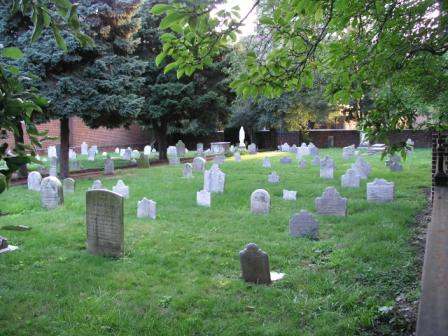
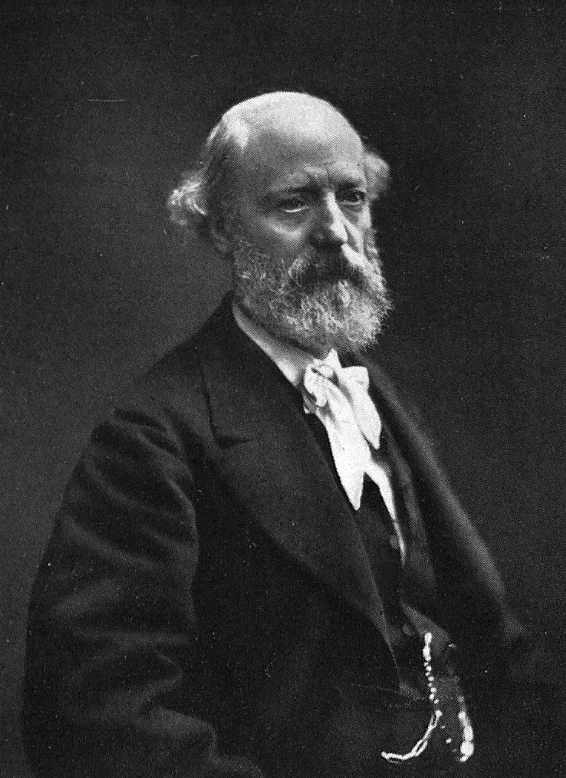
St. Boniface, Painted by Alfred Rethel

St. Boniface, Painted by Alfred Rethel

To systematize the work of evangelizing Germany, St. Boniface organized a hierarchy on the usual ecclesiastical basis; in Bavaria the Dioceses of Salzburg, Freising, Ratisbon, and Passau; in Franconia and Thuringia, Würzburg, Eichstätt, Buraburg near Fritzlar, and Erfurt. To facilitate missionary work farther north, especially among the Saxons, he sought a suitable spot for the location of a monastery. He chose for this mission St. Sturmius, who, after journeying far and wide, found an appropriate place in the great forest of Buchonia, in the district of Grabfeld on the Fulda. Boniface sanctioned this choice of a location, and petitioned Carloman, to whom the country round about belonged, to grant him the site for a monastery. Carloman yielded to the saint’s request, and also induced the Frankish nobles who had estates in the vicinity to bestow a part of them on the Church. On 12 March, 744, St. Sturmius took solemn possession of the land, and raised the cross. The wilderness was soon cleared, and the erection of the monastery and church, the latter dedicated to the Most Holy Redeemer, begun under the personnel direction of St. Boniface. He appointed St. Sturmius first abbot of the new foundation, which he intended to surpass in greatness all existing monasteries of Germany, and to be a nursery for priests. The rule was modelled on that of the Abbey of Monte Cassino, as Sturmius himself had gone to Italy (748) for the express purpose of becoming familiar with it. To secure absolute autonomy for the new abbey, Boniface obtained from Pope Zachary a privilege, dated 4 November, 751, placing it immediately under the Holy See, and removing it from all episcopal jurisdiction. The authenticity of this document has frequently been called into question, but on the whole it is considered as well established. (For further details see Tangl in “Mitteilungen des Instituts für österreichische Geschichtsforschung”, 1899; and B. Sepp, “Die Fuldaer Privilegien Frage”, Ratisbon, 1908.) In 753 Pepin gave the royal sanction to this exemption from episcopal jurisdiction. Boniface showed his love for Fulda when he charged that his remains should be laid to rest there.

Fulda Cathedral

Fulda Cathedral

Under the prudent administration of St. Sturmius (d. 779), the monastery soon rose to greater splendour; from an early period the tomb of St. Boniface made it a national sanctuary for Christian Germany. Great success crowned the agricultural work of the monks, and small colonies which were established in different places gradually became the centres of villages and civil communities. Soon Fulda was the mother-house of a number of smaller monasteries, which were later administered by provosts under the superiorship of the abbot. The gifts of German princes, nobles, and private individuals increased the landed possessions of the abbey so rapidly that they soon extended over distant parts of Germany; there were estates in Thuringia, Saxony, Hesse, Bavaria, Lorraine, Swabia: possessions along the Rhine, in East Frisia, and even at Rome (the church of Sant’ Andrea). Even in artistic and literary lines Fulda rose to great importance. On the site of the first church, which had been artistically decorated by Sturmius, there rose under Abbots Baugulf (779-802), Ratgar (802-17), Eigil (818-22), and Rabanus Maurus (822-42) a magnificent edifice which roused the admiration of contemporaries, and even of posterity, and exerted a lasting influence on architectural and artistic activity in distant places. In addition to architecture, sculpture and painting were zealously cultivated. The monastic school established by Sturmius began to flourish during the time of Charlemagne and Alcuin, and, under Rabanus Maurus, particularly, was the chief nursery of civilization and learning in Germany, and became celebrated throughout Europe. It was open not only to theological students, but also to young men desiring to embrace secular careers. The curriculum embraced the subjects usually taught during the Middle Ages: the seven liberal arts (grammar, rhetoric, dialectics, arithmetic, geometry, physics, and astronomy), the different branches of theology, and the German language. Among the most renowned pupils of this school were: Rabanus Maurus, Walafried Strabo, Servatus Lupus, Otfried of Weissenburg, Rudolfus Fuldensis, Williram, Probus, and Meginhard; among the laity: Einhard, Bernhard, King of Italy, and Ulrich von Hutten. Rabanus also founded a library to familiarize the Germans with religious and classical literature, and the zeal of the monks soon produced rich treasures of valuable manuscripts. Unfortunately the greater part of this library disappeared during the looting of the abbey by the Hessians in 1631, and has not since been discovered.

Painting of St. Boniface establishing the four ancient Bavarian dioceses, pointing them out to the various Bishops and Abbot.

Painting of St. Boniface establishing the four ancient Bavarian dioceses, pointing them out to the various Bishops and Abbot.

Gradually the monastery rose to a commanding position in the German Empire. From 968 the abbot was primate of all the Benedictine monasteries of Germany and Gaul; from the time of Otto I, arch-chancellor of the empress, whom he crowned jointly with the Elector of Mainz; from the twelfth century he was a prince of the empire; from 1184 had the privilege of sitting at the left of the emperor; and from 1360 the imperial banner was borne before him by a knight. This glory, however, was not wholly without shadows. The monastic discipline was relaxed to such a degree that Abbot Marquard (1150-65) undertook to carry out a reform by introducing the regulations in force at Hirsau (Consuetudines Hirsaugienses). The importance of the school as a centre of learning also declined. The great wealth of the abbey in landed possessions, tithes, revenues, and regalia drew an increasing number of nobles to the monastery. By the twelfth century the monks of noble birth had monopolized the seats of the chapter and, in the course of time, practically all the important offices of the abbey itself, as well as the provostships of the dependent houses, were held by members of the German nobility. The difficulty of administering the vast landed possessions caused the abbots to grant certain sections in fief, which eventually resulted in great losses to the abbey; for the feudatories frequently turned their positions to their own personal interests, and sought to convert the fiefs into private property. One of the most notable illustrations of the greed of these monastic stewards is shown by the action of Count Johann von Ziegenhain in the fourteenth century, who, in an insurrection of the burgers of the city of Fulda against Abbot Heinrich VI von Hohenberg (1315-53), headed an attack on the monastery. Not infrequently, too, the obligations of the abbots as princes of the empire, and the demands made upon them by the state proved most detrimental to the interests of the monastery and its inmates. In 1294, on application of the convent, the pope enjoined a separation of the abbatial and the conventual tables, which was put into effect in 1300 under Abbot Heinrich V von Weilnau (1288-1313) (cf. Rübsam, “Heinrich V. von Weilnau, Fürstabt von Fulda”, Fulda, 1879). Imperial capitulations, of which there are records as early as the time of Heinrich VII von Kranlucken (1353-72), especially those of Johann I von Merlau (1395-1440), the “Old Statutes of 1395”, restricted to a considerable degree the authority of the abbot over the convent, and raised correspondingly the independent status of that institution. In the mother-house the dean eventually replaced the abbot for all practical purposes. For centuries the chapter preserved this independence, which involved the almost complete exclusion of the abbot from the ecclesiastical organization of his monastery.

St. Sturmius

St. Sturmius

At a comparatively early date the teachings of the Reformers found access to the chapter of Fulda, with which, in 1513, the Abbey of Hersfeld had been united; and Abbot Johannes III von Henneberg (1521-41) was forced to consent to a decree of reform favouring the spread of the new doctrines. The zealous Abbot Balthasar von Dermbach (1570-1606) proved an earnest restorer of discipline in the chapter, vigorously inaugurating the work of the Counter-Reformation. Banished by the members of the chapter and their colleagues in 1576, he was unable to return to his abbey until 1602, great progress having been made meanwhile by the imperial administrators in restoring the Catholic Faith. The foundation of a Jesuit college in 1571 was the signal for the reflorescence of the school, which had sunk to comparative insignificance. In addition to the Jesuit gymnasium, Gregory XIII founded (1584) a papal seminary, which he placed under the direction of the Jesuits. Both of these institutions have contributed largely to the maintenance and spread of the Catholic Faith in Germany. A similar zeal for reform was displayed by Balthasar’s second successor, Johann Bernhard Schenk von Schweinsberg (1623-32), whose exertions, together with the decrees of several papal visitors, particularly Pietro Luigi Caraffa (1627), restored to the abbot a certain measure of his proper authority, over against that of the chapter and the professors of noble birth. The decrees of reform issued by Caraffa, against which the provosts rebelled after the nuncio’s departure, were repeatedly confirmed by the Holy See. The capitulars and provosts of noble birth still retained the privilege of admitting into the chapter only such as could show a certain number of noble ancestors, and this prerogative received papal confirmation in 1731. During the Thirty Years War the chapter was again menaced; in 1631, Landgrave Wilhelm V of Hesse, by virtue of a treaty with Gustavus Adolphus, received the abbey in fief to Sweden, and sought gradually to make Protestantism predominant. After the battle of Nördlingen, however, he no longer had power over Fulda. When the turmoil of the war had ceased, the abbey experienced a period of peace and prosperity. In 1732 the Jesuit and Benedictine schools were united, enlarged, and converted into a university. Benedict XIV raised the abbey to the rank of a bishopric (5 Oct., 1752), with the retention of its monastic organization. The first prince-bishop was Amand von Buseck (1737-56), the collegiate chapter of one dean and fourteen capitulars being now the cathedral chapter.

Subscription7By the Imperial Delegates’ Enactment (Reichsdeputationshauptschluss) of 1802 the abbey was secularized, and bestowed on the Prince of Orania as a secular principality; it embraced at this time forty sq. miles, with a population of 100,000. Under Napoleon, in 1809, it was ceded to the Grand Duchy of Frankfort; in 1815, to Hesse-Kassel, with which, in 1866, it passed to Prussia. The university was closed under the law of secularization, and the papal seminary was converted into an episcopal seminary. The last prince-bishop, Adalbert III von Harstall (1788-1802), died in 1814.

In accordance with the Bulls “Provida solersque” of 1821 and “Ad dominici gregis custodiam” of 1827, the Diocese of Fulda was re-established in 1829, and made suffragan to the ecclesiastical province of the Upper Rhine, the first bishop being Johann Adam Rieger (1829-31).

Fulda by Matthäus Merian der Ältere de Oude

Fulda by Matthäus Merian der Ältere de Oude

In 1857 and 1871 the boundaries of the new diocese were so altered as to define the territory now embraced within it. It was seriously affected by the Kulturkampf, the see being vacant from 1873 to 1881, and the seminary closed between 1873 and 1886; some of the religious communities suppressed at that time have never been re-established.

BROUWER, Fuldensium antiquitates libri IV (Antwerp, 1612); SCHANNAT, Corpus traditionum Fuldensium (Leipzig, 1724); IDEM, Fuldischer Lehn-hof (Frankfort-on-the-Main, 1726); IDEM, Vindiciæ quorundam archivi Fuldensis diplomatum (Frankfort-on-the-Main, 1728); DRONKE, Traditiones et antiquitates Fuldenses (Kassel, 1844); IDEM, Codex diplomaticus Fuldensis (Kassel, 1850; index, 1862); ARND, Geschichte des Hochstifts Fulda (Frankfort, 1862); GEGENBAUER, Das Kloster Fulda im Karolingerzeitalter (2 vols., 1871, 1873); KOMP, Die zweite Schule Fuldas und das päpstliches Seminar (Fulda, 1877); IDEM in Kirchenlex., s. v.; LOTZ, Die Hochschule zu Fulda, in Hessenland, XII (1898); HEYDENREICH, Das älteste Fuldaer Cartular (Leipzig, 1899); RICHTER, Die ersten Anfänge der Bau- und Kunsttätigkeit des Klosters Fulda (Fulda, 1900); IDEM, Quellen und Abhandlungen zur Geschichte der Abtei und der Diözese Fulda, I-III (Fulda, 1904-07); Schematismus der Diözese Fulda (Fulda, 1904; new ed., 1909); Festgabe zum Bonifatiusjubilæum, 1905 (Fulda, 1905); a collection of original documents relating to Fulda is in the course of preparation.

JOSEPH LINS (Catholic Encyclopedia)

{ 0 comments }

h/t The Catholic Herald

H.S.H. Prince Albert II of Monaco. Photo by John.

According to The Catholic Herald:

A European Catholic monarch is refusing to sign a bill that would have legalised abortion in his Catholic country.

Prince Albert II of Monaco has declined to sign a bill passed by the National Council that would have legalised abortion in the Principality.

The proposed legislation, introduced to the National Council in March 2025 and passed by 19 votes to 2 in May, sought to authorise voluntary termination up to 12 weeks (16 weeks in cases of rape) and reduce the age of parental consent from 18 to 15.

h/t The Catholic Herald

{ 0 comments }

Pope St. Damasus I

Born about 304; died 11 December, 384.

His father, Antonius, was probably a Spaniard; the name of his mother, Laurentia, was not known until quite recently. Damasus seems to have been born at Rome; it is certain that he grew up there in the service of the church of the martyr St. Laurence. He was elected pope in October, 366, by a large majority, but a number of over-zealous adherents of the deceased Liberius rejected him, chose the deacon Ursinus (or Ursicinus), had the latter irregularly consecrated, and resorted to much violence and bloodshed in order to seat him in the Chair of Peter. Many details of this scandalous conflict are related in the highly prejudiced “Libellus Precum” (P.L., XIII, 83-107), a petition to the civil authority on the part of Faustinus and Marcellinus, two anti-Damasan presbyters (cf. also Ammianus Marcellinus, Rer. Gest., XXVII, c. iii). Valentinian recognized Damasus and banished (367) Ursinus to Cologne, whence he was later allowed to return to Milan, but was forbidden to come to Rome or its vicinity.

The party of the antipope (later at Milan an adherent of the Arians and to the end a contentious pretender) did not cease to persecute Damasus. An accusation of adultery was laid against him (378) in the imperial court, but he was exonerated by Emperor Gratian himself (Mansi, Coll. Conc., III, 628) and soon after by a Roman synod of forty-four bishops (Liber Pontificalis, ed. Duchesne, s.v.; Mansi, op. cit., III, 419) which also excommunicated his accusers.

Lithography of Pope Saint Damasus I (Lisboa, 1840), by Pedro Augusto Guglielmi.

Lithography of Pope Saint Damasus I (Lisboa, 1840), by Pedro Augusto Guglielmi.

Damasus defended with vigour the Catholic Faith in a time of dire and varied perils. In two Roman synods (368 and 369) he condemned Apollinarianism and Macedonianism; he also sent his legates to the Council of Constantinople (381), convoked against the aforesaid heresies. In the Roman synod of 369 (or 370) Auxentius, the Arian Bishop of Milan, was excommunicated; he held the see, however, until his death, in 374, made way for St. Ambrose. The heretic Priscillian, condemned by the Council of Saragossa (380) appealed to Damasus, but in vain. It was Damasus who induced Saint Jerome to undertake his famous revision of the earlier Latin versions of the Bible. St. Jerome was also his confidential secretary for some time (Ep. cxxiii, n. 10). An important canon of the New Testament was proclaimed by him in the Roman synod of 374. The Eastern Church, in the person of St. Basil of Cæsarea, besought earnestly the aid and encouragement of Damasus against triumphant Arianism; the pope, however, cherished some degree of suspicion against the great Cappadocian Doctor. In the matter of the Meletian Schism at Antioch, Damasus, with Athanasius and Peter of Alexandria, sympathized with the party of Paulinus as more sincerely representative of Nicene orthodoxy; on the death of Meletius he sought to secure the succession for Paulinus and to exclude Flavian (Socrates, Hist. Eccl., V, xv). He sustained the appeal of the Christian senators to Emperor Gratian for the removal of the altar of Victory from the Senate House (Ambrose, Ep. xvii, n. 10), and lived to welcome the famous edict of Theodosius I, “De fide Catholica” (27 Feb., 380), which proclaimed as the religion of the Roman State that doctrine which St. Peter had preached to the Romans and of which Damasus was supreme head (Cod. Theod., XVI, 1, 2).

Subscription2When, in 379, Illyricum was detached from the Western Empire, Damasus hastened to safeguard the authority of the Roman Church by the appointment of a vicar Apostolic in the person of Ascholius, Bishop of Thessalonica; this was the origin of the important papal vicariate long attached to that see. The primacy of the Apostolic See, variously favoured in the time of Damasus by imperial acts and edicts, was strenuously maintained by this pope; among his notable utterances on this subject is the assertion (Mansi, Coll. Conc., VIII, 158) that the ecclesiastical supremacy of the Roman Church was based, not on the decrees of councils, but on the very words of Jesus Christ (Matt., xvi, 18). The increased prestige of the early papal decretals, habitually attributed to the reign of Siricius (384-99), not improbably belongs to the reign of Damasus (“Canones Romanorum ad Gallos”; Babut, “La plus ancienne décrétale”, Paris, 1904). This development of the papal office, especially in the West, brought with it a great increase of external grandeur. This secular splendour, however, affected disadvantageously many members of the Roman clergy, whose worldly aims and life, bitterly reproved by St. Jerome, provoked (29 July, 370) an edict of Emperor Valentinian addressed to the pope, forbidding ecclesiastics and monks (later also bishops and nuns) to pursue widows and orphans in the hope of obtaining from them gifts and legacies. The pope caused the law to be observed strictly.

letter from St. Jerome to Pope St. Damasus I (Novum Opus) from the Codex Beneventanus.

Letter from St. Jerome to Pope St. Damasus I (Novum Opus) from the Codex Beneventanus.

Damasus restored his own church (now San Lorenzo in Damaso) and provided for the proper housing of the archives of the Roman Church. He built in the basilica of St. Sebastian on the Appian Way the (yet visible) marble monument known as the “Platonia” (Platona, marble pavement) in honour of the temporary transfer to that place (258) of the bodies of Sts. Peter and Paul, and decorated it with an important historical inscription (see Northcote and Brownlow, Roma Sotterranea). He also built on the Via Ardeatina, between the cemeteries of Callistus and Domitilla, a basilicula, or small church, the ruins of which were discovered in 1902 and 1903, and in which, according to the “Liber Pontificalis”, the pope was buried with his mother and sister. On this occasion the discoverer, Monsignor Wilpert, found also the epitaph of the pope’s mother, from which it was learned not only that her name was Laurentia, but also that she had lived the sixty years of her widowhood in the special service of God, and died in her eighty-ninth year, having seen the fourth generation of her descendants. Damasus built at the Vatican a baptistery in honour of St. Peter and set up therein one of his artistic inscriptions (Carmen xxxvi), still preserved in the Vatican crypts. This subterranean region he drained in order that the bodies buried there (juxta sepulcrum beati Petri) might not be affected by stagnant or overflowing water. His extraordinary devotion to the Roman martyrs is now well known, owing particularly to the labours of Giovanni Battista De Rossi. For a good account of his architectural restoration of the catacombs and the unique artistic characters (Damasan Letters) in which his friend Furius Dionysius Filocalus executed the epitaphs composed by Damasus, see Northcote and Brownlow, “Roma Sotterranea” (2nd ed., London, 1878-79). The dogmatic content of the Damasan epitaphs (tituli) is important (Northcote, Epitaphs of the Catacombs, London, 1878). He composed also a number of brief epigrammata on various martyrs and saints and some hymns, or Carmina, likewise brief. St. Jerome says (Ep. xxii, 22) that Damasus wrote on virginity, both in prose and in verse, but no such work has been preserved. For the few letters of Damasus (some of them spurious) that have survived, see P.L., XIII, 347-76, and Jaffé, “Reg. Rom. Pontif.” (Leipzig, 1885), nn. 232-254.

THOMAS J. SHAHAN (Catholic Encyclopedia)

{ 0 comments }
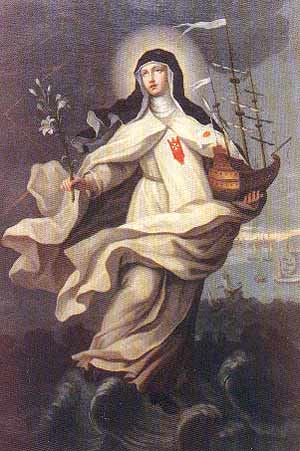
by Cesar Franco

The Miraculous Image of Our Lady of Guadalupe

Pope Pius XII gave Our Lady of Guadalupe the title of “Empress of the Americas” in 1945. Since December 12 is the feast of Our Lady of Guadalupe, this is a propitious moment to recall how She reigns over our nation from Heaven, protecting and guiding us with Motherly solicitude and tenderness. The constant miracle memorialized on Saint Juan Diego’s tilma and the context of the apparitions remind us that Our Lady is victorious over the serpent, intervenes in history and is eager to intercede for those who seek Her intercession in this vale of tears.

How Our Lady Intervened in History
The oldest reliable source of the apparitions of the Mother of God to Saint Juan Diego was written in Náhuatl by Antonio Valeriano. He was a contemporary of Saint Juan Diego and Bishop Frey Juan de Zumárraga. Mr. Valeriano’s account was published in 1649 and is known as the Nican Mopohua.

“My Holy One, my Lady, my Damsel, I am on my way to your house at Mexico-Tlatilulco; I go in pursuit of the holy things that our priests teach us.”

On December 9, 1531, Juan Diego was on his way to attend Mass in what is today Mexico City. It was dawn as he approached Tepeyac Hill, a few miles from his destination. Juan Diego was no ordinary Indian, but the grandson of King Netzahualcoyotl,(1) and the son of King Netzahualpilic and Queen Tlacayehuatzin, who was a descendant of Moctezuma I.

As Juan Diego neared the hill’s summit, something extraordinary happened. Unseen birds began to sing in a supernatural way. The birds would pause while others responded, forming a heavenly duet. He thought he was perhaps dreaming and pondered how unworthy he was to witness something so extraordinary.

The heavenly symphony stopped and a sweet voice called him from the summit, “Juanito. Juan Diegito.” Hearing this, he happily ascended the hill. What he found upon reaching the source of the voice changed his life forever. There, on a rock, stood a beautiful Lady. Everything around Her was transformed. Her clothing was as radiant as the sun. The rock She stood upon seemed to emit rays of light. She was surrounded with the splendors of the rainbow. Cacti and other plants nearby looked like emeralds. Their spines sparkled like gold and their leaves were like fine turquoise.

Juan Diego bowed before Her in ceremonious respect. A tender dialogue between Our Lady and Juan Diego followed, “Listen, xocoyote mio,(2) Juan, where are you going?”

Rejoicing, he happily responded, “My Holy One, my Lady, my Damsel, I am on my way to your house at Mexico-Tlatilulco; I go in pursuit of the holy things that our priests teach us.”

Painting of St. Juan Diego by Miguel Cabrera

The celestial Lady revealed to him that She was indeed the Mother of God, telling him of Her desire to have a church built, where She might bestow all her love, mercy, help and protection. She showed overflowing love to Juan Diego, “and to all the other people dear to Me who call upon Me, who search for Me, who confide in Me; here I will hear their sorrow, their words, so that I may make perfect and cure their illnesses, their labors and their calamities.”

Then Our Beloved Lady, respecting the authority established by God, sends the noble Juan Diego with this message to the bishop-elect of Mexico. She tells him to accomplish the mission diligently, promising to reward his services. He bows, telling Her that he will go straightaway to fulfill Her wishes, and departs.

Frey Juan de Zumárraga was one of the first twelve Franciscan missionaries to go to Mexico and the first bishop of that new land. When Juan Diego reached the bishop’s palace, he promptly announced he wished to deliver a message for the bishop. The servants made Juan Diego wait before allowing the audience. Obediently, and with great enthusiasm, he told the bishop what he had seen and heard. Bishop Zumarraga listened attentively, but told Juan Diego to return when they could discuss the matter at greater length. After all, how did he know the story was true?

Bishop Juan de Zumárraga, first Archbishop of Mexico City

Juan Diego returned to Tepeyac Hill. As he approached the hill, Our Lady was waiting for him. He drew near and knelt. With sadness, he told Our Lady that he failed in his mission. The marvelous dialogue continues, “My Holy One, most noble of persons, my Lady, my xocoyota, my Damsel . . . .”

Juan Diego explained why he failed, how unworthy he was for such a mission and how the bishop was suspicious. Our Lady listened tenderly and patiently as he suggested She send one of the well-known and respected lords of the land. Then, he thought, Her message would be believed.

Our Lady was not persuaded. She wanted him to accomplish the mission, and said, “I pray you, my xocoyote, and advise you with much care, that you go again tomorrow to see the bishop and represent Me; give him an understanding of My desire, my will, that he build the church that I ask . . . .”

Juan Diego did not fear the difficulties of the mission, he was only afraid the mission would not be accomplished. However, he told Our Lady he would fulfill Her command and return the following evening with the bishop’s reply.

“And now I leave you, my xocoyota, my Damsel, my Lady; meanwhile, you rest.” Juan Diego suggested that Our Lady rest! It is impressive that She not only allowed him to treat Her this way, but also loved his candidness.

The next day, he traveled to Mass. Afterward, he went directly to the bishop’s palace, fell on his knees and repeated all that Our Lady had told him. The bishop, in turn, asked questions about the Lady. Not entirely convinced, however, the bishop told Juan Diego that he could not affirm that the apparition was Our Lady and asked for a sign of reassurance from Our Lady to build a church.

Read More

{ 0 comments }

December 12 – Tancred

December 11, 2025

Tancred

Prince of Antioch, born about 1072; died at Antioch, 12 Dec., 1112. He was the son of Marquess Odo and Emma, probably the daughter of Robert Guiscard. He took the Cross in 1096 with the Norman lords of Southern Italy and joined the service of his uncle Bohemund. Having disembarked at Arlona (Epirus), they marched towards Constantinople, and Tancred soon attracted attention by his activity, bravery, and somewhat undisciplined zeal; according to his biographer, Raoul de Caen, he was noted also for his humanity and kindness towards the defenceless. He brilliantly repulsed the Byzantine army which attacked him as he was crossing the Vardar (28 Feb., 1097) from which time Tancred became and remained the bitter enemy of the Greeks. Unlike Bohemund, he was the only one of all the leaders who refused to take the oath of fidelity demanded by Alexis Comnenus. He played an important part in the siege of Nicæa, and later, during the difficult march through Asia Minor, he led the way southwards and captured Tarsus which Baldwin tried in vain to wrest from him (Sept., 1097). While Baldwin advanced towards the Euphrates, Tancred seized the towns of Cilicia. He took an active part also in the siege of Antioch. In the march on Jerusalem he commanded the vanguard, and on 15 July, 1099, he entered the city, after making a breach in the gate of St. Stephen. He vainly endeavoured to save the lives of 300 Mussulmans who had taken refuge in the Mosque of Omar (Templum Domini). On the other hand he looted the treasures amassed in that building and distributed them among his knights. He received from Godfrey de Bouillon, who had been selected over him as king, the fiefs of Tiberias and Caïfa. When Bohemund was captured by the Turks in July, 1100, Tancred assumed the government of the Principality of Antioch, and extended its boundaries at the expense of the Turks and the Greeks. During the war between Bohemund and Alexis Comnenus (1104-08), Tancred defended both the Principality of Antioch and the Courtship of Edessa; he also strengthened the Christian power in those districts, and refused to recognize the Treaty of Durazzo by which Bohemund had ceded the suzerainty of Antioch to the emperor. A skilled politician, he knew how to placate the Greeks and issued Greek money on which he is represented adorned with gold and jewels, wearing a turban surmounted by a cross.

RAOUL DE CAEN, Gesta Tancredi (the author went to Palestine in 1107 and was attached to the army of Tancred) in Hist. Occid. des Croisades, III, 537-601; SCHLUMBERGER, Numismatique de l’Orient latin (Paris, 1878), 45; DE SAULCY, Tancrède in Biblioth. Ecole des Chartes (1843); O. DE SYDOW, Tankred (Leipzig, 1880); REY, Hist. des princes d’Antioche in Revue Orient Latin (1896), 334; KUGLER, Boemund u. Tankred (Tübingen, 1862); CHALANDON, Essai sur le régne d’Alexis Comnène (Paris, 1900); STEVENSON, The Crusaders in the East (Cambridge, 1907).

LOUIS BRÉHIER (Catholic Encyclopedia)

{ 0 comments }
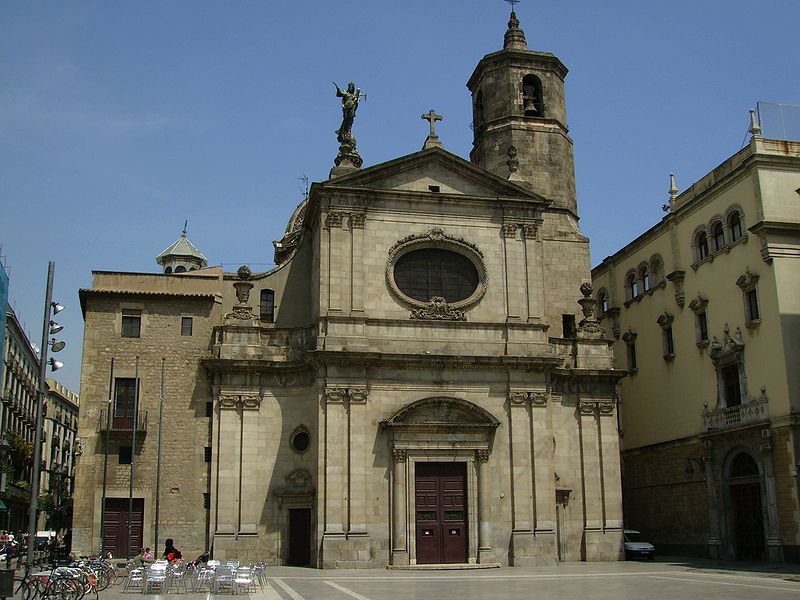
Hagia Sophia in Istanbul, Turkey.

Hagia Sophia in Istanbul, Turkey.

Resolved to defend the capital unto the very last breath, Constantine [XII] searched for help on all sides. He first turned his gaze to Rome. Shortly before his death, the Emperor John had distanced himself from unity with the Catholic Church. Constantine implored Pope Nicholas V for assistance and offered to bring about this Union between the two churches. Though so often deceived before, the Pope sent a Legate, and on December 12, 1452, a solemn ceremony took place in the Church of Hagia Sophia, betokening that West and East were united in the same faith, in one God, and one Eucharist.

Mehmed II, Entering to Constantinople. Painting by Fausto Zonaro

Gennadius Scholarius meeting Mehmed II upon his entering into Constantinople. Painting by Fausto Zonaro

But when the Greeks saw the West’s priestly vestments, the breaking of the unleavened Bread, and the addition of cold, not warm water into the chalice, they were appalled and hurriedly left Hagia Sophia, seeking counsel in the monastery cell of Gennadius Scholarius,* whom they considered to be a saint. The fanatic told them: “”O unhappy Romans [Byzantines], why have you forsaken the truth? Why do you not trust in God, instead of in the Italians? In losing your faith you will lose your city.” Now the nuns, “pure as angels, but proud as she-devils,” rejected all communion with those siding with the Latins. The mob cursed anyone who favored Union. The sailors on the docks toasted to the ruin of the Pope and his slaves, and emptied their cups in praises of the Most Holy Virgin. “What do we need the help of the Latins for?” Even the Lord High Admiral, Loukas Notaras, declared that he much preferred to see Mohammed’s turban in Constantinople, than the tiara of the Popes or the red galero of the Cardinals. All winter long thunderous tirades were heard from pulpits against anyone who wanted Union with Rome: “Not even on one’s deathbed, can one receive Holy Communion from such a person!” The Church of Hagia Sophia was avoided as if it were a pagan temple. No remedy could avail such situation. Those whom God wishes to destroy, He first abandons to insanity.


* Nobility.org’s note: Somewhat surprisingly, on June 1, 1453, just three days after the fall of Constantinople, Gennadius Scholarius was chosen by Mehmed II to be the new Greek Orthodox Patriarch. The Sultan received Gennadius graciously and personally invested him with the crosier and mantle—the symbols of his new office.

Subscription22

Johann Baptist von Weiss, Historia Universal, ed. Rev. Fr. Ramón Ruiz Amado, S.J., (Barcelona: Tipografia La Educación, 1929), Vol. VIII-1, 49-50. (Nobility.org translation.)

Short Stories on Honor, Chivalry, and the World of Nobility—no. 342


{ 0 comments }

St. Lucy

Panel depicting the martyrdom of St. Lucy

Panel depicting the martyrdom of St. Lucy

A virgin and martyr of Syracuse in Sicily, whose feast is celebrated by Latins and Greeks alike on 13 Dec. According to the traditional story, she was born of rich and noble parents about the year 283. Her father was of Roman origin, but his early death left her dependent upon her mother, whose name, Eutychia, seems to indicate that she came of Greek stock. Like so many of the early martyrs, Lucy had consecrated her virginity to God, and she hoped to devote all her worldly goods to the service of the poor. Her mother was not so single-minded, but an occasion offered itself when Lucy could carry out her generous resolutions. The fame of the virgin-martyr Agatha, who had been executed fifty-two years before in the Decian persecution, was attracting numerous visitors to her relics at Catania, not fifty miles from Syracuse, and many miracles had been wrought through her intercession. Eutychia was therefore persuaded to make a pilgrimage to Catania, in the hope of being cured or a haemorrhage, from which she had been suffering for several years. There she was in fact cured, and Lucy, availing herself of the opportunity, persuaded her mother to allow her to distribute a great part of her riches among the poor.

Subscription5

The largess stirred the greed of the unworthy youth to whom Lucy had been unwillingly betrothed, and he denounced her to Paschasius, the Governor of Sicily. It was in the year 303, during the fierce persecution of Diocletian. She was first of all condemned to suffer the shame of prostitution; but in the strength of God she stood immovable, so that they could not drag her away to the place of shame. Bundles of wood were then heaped about her and set on fire, and again God saved her. Finally, she met her death by the sword. But before she died she foretold the punishment of Paschasius and the speedy termination of the persecution, adding that Diocletian would reign no more, and Maximian would meet his end. So, strengthened with the Bread of Life, she won her crown of virginity and martyrdom.

Relic of St. Lucy in the Cathedral of Siracusa, Italy

Relic of St. Lucy in the Cathedral of Siracusa, Italy

This beautiful story cannot unfortunately be accepted without criticism. The details may be only a repetition of similar accounts of a virgin martyr’s life and death. Moreover, the prophecy was not realized, if it required that Maximian should die immediately after the termination of his reign. Paschasius, also, is a strange name for a pagan to bear. However, since there is no other evidence by which the story may be tested, it can only be suggested that the facts peculiar to the saint’s story deserve special notice. Among these, the place and time of her death can hardly be questioned; for the rest, the most notable are her connexion with St. Agatha and the miraculous cure of Eutychia, and it is to be hoped that these have not been introduced by the pious compiler of the saint’s story or a popular instinct to link together two national saints. The story, such as we have given it, is to be traced back to the Acta, and these probably belong to the fifth century. Though they cannot be regarded as accurate, there can be no doubt of the great veneration that was shown to St. Lucy by the early church.

She is one of those few female saints whose names occur in the canon of St. Gregory, and there are special prayers and antiphons for her in his “Sacramentary” and “Antiphonary”. She is also commemorated in the ancient Roman Martyrology. St. Aldheim (d. 709) is the first writer who uses her Acts to give a full account of her life and death. This he does in prose in the “Tractatus de Laudibus Virginitatis” (Tract. xliii, P. L., LXXXIX, 142) and again, in verse, in the poem “De Laudibus Virginum” (P. L., LXXXIX, 266). Following him, the Venerable Bede inserts the story in his Martyrology.

The former grave of Saint Lucy, now empty, but embellished by reliefs dating from the Norman period and by a rich baroque wood frame.

The former grave of Saint Lucy, now empty, but embellished by reliefs dating from the Norman period and by a rich baroque wood frame.

With regard to her relics, Sigebert (1030-1112), a monk of Gembloux, in his “sermo de Sancta Lucia”, says that he body lay undisturbed in Sicily for 400 years, before Faroald, Duke of Spoleto, captured the island and transferred the saint’s body to Corfinium in Italy. Thence it was removed by the Emperor Otho I, 972, to Metz and deposited in the church of St. Vincent. And it was from this shrine that an arm of the saint was taken to the monastery of Luitburg in the Diocese of Spires—an incident celebrated by Sigebert himself in verse. The subsequent history of the relics is not clear. On their capture of Constantinople in 1204, the French found some of the relics in that city, and the Doge of Venice secured them for the monastery of St. George at Venice. In the year 1513 the Venetians presented to Louis XII of France the head of the saint, which he deposited in the cathedral church of Bourges. Another account, however, states that the head was brought to Bourges from Rome whither it had been transferred during the time when the relics rested in Corfinium.

The Incorrupt remains of St. Lucy in the Church of San Geremia, Venice. Her head is at the Cathedral in Bourges.

The Incorrupt remains of St. Lucy in the Church of San Geremia, Venice. Her head is at the Cathedral in Bourges.

JAMES BRIDGE (1913 Catholic Encyclopedia)
For more pictures of the Basilica of St. Lucy in Syracuse, click here.

{ 0 comments }

Panel depicting the martyrdom of St. Lucy

Saint Lucy Day and Saint Lucy Buns


Lussekattor

Sadly, Scandinavia joined the Protestant Reformation in the 16th century and thus lost that link with the Papacy forged in 960 with the baptism of Harald “Bluetooth” Gormsson, king of Denmark and Norway.

With Protestantism, devotion to most saints was abandoned, but among the few that remained was Saint Lucy, the noble virgin-martyr of Syracuse, Sicily. Devotion to her ebbed and flowed, but today, it is greatly celebrated with the tradition known as Saint Lucy Day.

In Sweden, Denmark, Norway, and Finland, Saint Lucy is venerated on her feast day, December 13, in a ceremony where a young girl is chosen to portray the noble virgin and martyr. Wearing a white gown with a red sash and a crown of candles on her head, she walks at the head of a procession of other girls, each holding a candle, and singing a song in honor of Saint Lucy. The candles symbolize the fire that refused to take Saint Lucy’s life when she was sentenced to be burned to death by the Roman judge, during the persecution of Diocletian.

Subscription4


Each Scandinavian country has its own lyrics of the song in honor of Saint Lucy, but the general theme is how Saint Lucy’s light overcomes the darkness.

Among the sweet confections consumed on Saint Lucy’s Day are the Saint Lucy buns.


 LUSSEKATTOR

½ Cup butter

1 ¼ Cup milk

¼ tsp. saffron

1 Tbsp. dry yeast

½ Cup sugar

5 ¾ Cup flour

Raisins

1 egg

Salt


Melt butter in a pan and add the milk and the saffron. Warm the mixture to 98.6°F (37°C). Use a cooking thermometer, because the correct temperature is important. Sprinkle the yeast over the mixture, let stand for three minutes, then add the remaining ingredients (except for the egg and raisins), which should be at room temperature. Mix into a smooth dough.

Cover the dough with a piece of cloth and let it rise for 30 minutes. Knead the dough, divide it into 25 to 3 pieces and form each piece into a round bun. Let the buns rest for a few minutes, covered by a piece of cloth.

Form each bun into a string, 6 to 8 inches (15-20 cm) long, then arrange the string in a suitable shape, e.g., a figure eight or a double S.  Regardless of the shape, the ends of the string should meet. Press a few raisins into the dough. Cover the dough with a piece of cloth and let them rise for 40 minutes. Whip the egg together with a few grains of salt, and paint the dough with the mixture. Bake them for 5 to 10 minutes at 475°F (250°C) until golden brown.

Makes 25 to 30 buns.

Lussekattor


Check out the other recipes posted on Nobility.org!

{ 0 comments }

St. Jane Frances de Chantal

St. Jane Frances de Chantal at the age of 30 years.

Born at Dijon, France, 28 January, 1572; died at the Visitation Convent Moulins, 13 December, 1641.

Her father was president of the Parliament of Burgundy, and leader of the royalist party during the League that brought about the triumph of the cause of Henry IV. In 1592 she married Baron de Chantal, and lived in the feudal castle of Bourbilly. She restored order in the household, which was on the brink of ruin, and brought back prosperity. During her husband’s absence at the court, or with the army, when reproached for her extremely sober manner of dressing, her reply was: “The eyes which I must please are a hundred miles from here”. She found more than once that God blessed with miracles the care she gave the suffering members of Christ. St. Francis de Sales’s eulogy of her characterizes her life at Bourbilly and everywhere else: “In Madame de Chantal I have found the perfect woman, whom Solomon had difficulty in finding in Jerusalem”. Baron de Chantal was accidently killed by an arquebus while out shooting in 1601. Left a widow at twenty-eight, with four children, the broken-hearted baroness took a vow of chastity. In all her prayers she besought God to send her a guide and God, in a vision, showed her the spiritual director He held in reserve for her. In order to safeguard her children’s property, she was obliged to go and live at Monthelon in the home of her father-in-law, who was ruled over by an arrogant and wicked servant. This was real servitude, which she bore patiently and gently for seven years. At last her virtue triumphed over the ill will of the old man and house keeper.

St. Jane Frances de Chantal and her family. Stainglass window in the Basilica in Annecy, France.

During Lent, 1604, she visited her father at Dijon, where St. Francis de Sales was preaching at the Sainte Chapelle. She recognized in him the mysterious director who had been shown her, and placed herself under his guidance. Then began an admirable correspondence between the two saints. Unfortunately, the greater number of letters are no longer in existence, as she destroyed them after the death of the holy bishop. When she had assured the future security of her children, and when she had provided the education of Celse-Bénigne, her fourteen year old son, whom she left to her father and her brother, the Archbishop of Bourges, she started for Annecy, where God was calling her to found the Congregation of the Visitation. She took her two remaining daughters with her, the elder having recently married the Baron of Thorens, a brother of St. Francis de Sales. Celse-Bénigne, impetous like those of her race, barred his mother’s way by lying across the threshold. Mme de Chandal stopped, overcome: “Can the tears of a child shake her resolution?” said a holy and learned priest, the tutor of Celse-Benigne. “Oh! no”, replied the saint, “but after all I am a mother!” And she stepped over her child’s body.

The Congregation of the Visitation was canonically established at Annecy on Trinity Sunday, 6 June, 1610. Its aim was to receive, with a view to their spiritual advancement, young girls and even widows who had not the desire or strength to subject themselves to the austere ascetical practices in force in all the religious orders at that time. St. Francis de Sales was especially desirous of seeing the realization of his cherished method of attaining perfection, which consisted in always keeping one’s will united to the Divine will, in taking so to speak one’s soul, heart, and longings into one’s hands and giving them into God’s keeping, and in seeking always to do what is pleasing to Him. “I do always the things that please him” (John, viii, 29). The two holy founders saw their undertaking prosper. At the time of the death of St. Francis de Sales in 1622, the order already counted thirteen houses; there were eight-six when St. Jane Frances died; and 164 when she was canonized.

St. Francois de Sales giving the Rule of the Visitation to St. Jeanne de Chantal. Painting by Noël Hallé

The remainder of the saint’s life was spent under the protection of the cloister in the practice of the most admirable virtues. If a gentle kindness, vivified and strengthened by a complete spirit of renunciation, predominates in St. Francis de Sales, it is firmness and great vigor which prevails in St. Jane Frances; she did not like to see her daughters giving way to human weakness. Her trials were continuous and borne bravely, and yet she was exceedingly sensitive. Celse-Bénigne was an incorrigible duelist. She prayed so fervently that he was given the grace to die a Christian death on the battlefield, during the campaign against the Isle of Ré (1627). He left a daughter who became the famous Marquise de Sévigné. To family troubles God added interior crosses which, particularly during the last nine years of her life, kept her in agony of soul from which she was not freed until three months before her death.

Her reputation for sanctity was widespread. Queens, princes, and princesses flocked to the reception-room of the Visitation. Wherever she went to establish foundations, the people gave her ovations. “These people”, she would say confused, “do not know me; they are mistaken”. Her body is venerated with that of St. Francis de Sales in the church of the Visitation at Annecy. She was beatified in 1751 and canonized in 1767.

Painting of St. Jane Frances de Chantal by Fr. Michael Fuchs of the Provincial of the Oblates of St. Francis de Sales in Vienna, Kaasgraben

The life of the saint was written in the seventeenth century, with inimitable charm, by her secretary, Mother de Chaugy. Monsignor Bougaud, who died Bishop of Laval, published in 1863 a “Histoire de Sainte Chantal” which had a great and well-deserved success.

The words of the saint comprise instructions on the religious life, various minor works, among which is the admirable “Deposition for the Process of Beatification of St. Francis de Sales”, and a great many letters. The Saint’s qualities are seen in her precise and vigorous style, void of imagery but betraying a repressed emotion, and bursting forth spontaneously from the heart, anticipating in its method the beautiful French of the seventeenth century. The book which may be called her masterpiece, “Réponses sur les Régles, Constitutions et Coutumes”, a truly practical and complete code of the religious life, is not in circulation.

RAPHAL PERNIN 1913 Catholic Encyclopedia

{ 0 comments }

Isabella the Liberator

December 11, 2025

Closeup photo of San Juan de los Reyes, Toledo, Spain by MRMaeyaert. Hanging from the exterior walls are the manacles and shackles once worn by the Catholics imprisoned by the Muslims.

Closeup photo of San Juan de los Reyes, Toledo, Spain by MRMaeyaert. Hanging from the exterior walls are the manacles and shackles once worn by the Catholics imprisoned by the Muslims.

Queen Isabella of Castile and León—the sponsor of Christopher Columbus’s discovery of the Americas—is known in History as “Isabella the Catholic,” but she could also be seen as “Isabella the Liberator.”

During the ten-year war to reconquer the Kingdom of Granada and reintegrate it into Catholic Spain, she liberated thousands of Catholic captives reduced to the harshest slavery by their Muslim masters. As the virtuous Queen’s troops stormed the walls of city after Muslim city, the dungeons inside disgorged a veritable cross-section of enslaved Castilian society: nobles; ladies; clergy; knights; religious; merchants; peasants; men; women; and children.

A closeup of the manacles and shackles.

A closeup of the manacles and shackles.

All who were captured by the Muslims in their cruel razias were driven like cattle back to the kingdom of Granada and sold as slaves in the open market. Anyone not able to ransom himself or herself was doomed to a life that seemed worse than death. Sadly, and to put an end to their tortures and sufferings, many despaired and apostatized from the Catholic faith, submitting to Islam. The temptation to do this was so strong and the lot of the captives so pitiful, that God had inspired St. Peter Nolasco to found the Mercedarians in 1218—a religious order dedicated to the redemption of captives who were at risk of losing the Faith. While this worthy order had grown immensely and done much good in the following centuries, thousands upon thousands of Catholics still languished in Muslim slavery when the war for the reconquest of Granada started in December 1481.

Photo of the chains and shackles hanging on the facade of San Juan de los Reyes taken by Txispun.

Photo of the chains and shackles hanging on the facade of San Juan de los Reyes taken by Txispun.

For the next ten years, until the fall of the capital city of Granada in January 1492, Christian captives were liberated from slavery with every Spanish victory. Thousands of these Catholic ex-slaves followed the example of the cured Samaritan leper, and made their way to wherever Queen Isabella was to thank the sovereign on their knees for their regained freedom. She commanded her troops to knock off their chains, which she then ordered hung outside the walls of the Monastery of St. John of the Kings, which she built in Toledo in thanksgiving to God for her victory in the wars she was forced to fight to secure her rights to the Crown at the beginning of her illustrious reign. Today, more than 500 years later, many of these ancient chains can still be seen where they were first hung in silent gratitude and tribute to the Crusading heroism and charity of a truly Catholic Queen.

Short Stories on Honor, Chivalry, and the World of Nobility—no. 459

Subscription14

{ 0 comments }

St. John of the Cross

Founder (with St. Teresa) of the Discalced Carmelites, doctor of mystic theology, born at Hontoveros, Old Castile, 24 June, 1542; died at Ubeda, Andalusia, 14 Dec., 1591.

St. John of the CrossJohn de Yepes, youngest child of Gonzalo de Yepes and Catherine Alvarez, poor silk weavers of Toledo, knew from his earliest years the hardships of life. The father, originally of a good family but disinherited on account of his marriage below his rank, died in the prime of his youth; the widow, assisted by her eldest son, was scarcely able to provide the bare necessities. John was sent to the poor school at Medina del Campo, whither the family had gone to live, and proved an attentive and diligent pupil; but when apprenticed to an artisan, he seemed incapable of learning anything. Thereupon the governor of the hospital of Medina took him into his service, and for seven years John divided his time between waiting on the poorest of the poor, and frequenting a school established by the Jesuits. Already at that early age he treated his body with the utmost rigour; twice he was saved from certain death by the intervention of the Blessed Virgin. Anxious about his future life, he was told in prayer that he was to serve God in an order the ancient perfection of which he was to help bring back again. The Carmelites having founded a house at Medina, he there received the habit on 24 February, 1563, and took the name of John of St. Matthias. After profession he obtained leave from his superiors to follow to the letter the original Carmelite rule without the mitigations granted by various popes. He was sent to Salamanca for the higher studies, and was ordained priest in 1567; at his first Mass he received the assurance that he should preserve his baptismal innocence. But, shrinking from the responsibilities of the priesthood, he determined to join the Carthusians.

Statue of St. Teresa in the room where she was born. A church was built on her family home, as it was destroyed.

Statue of St. Teresa of Avila in the room where she was born. A church was built on the site of her family home, as it was destroyed.

However, before taking any further step he made the acquaintance of St. Teresa, who had come to Medina to found a convent of nuns, and who persuaded him to remain in the Carmelite Order and to assist her in the establishment of a monastery of friars carrying out the primitive rule. He accompanied her to Valladolid in order to gain practical experience of the manner of life led by the reformed nuns. A small house having been offered, St. John resolved to try at once the new form of life, although St. Teresa did not think anyone, however great his spirituality, could bear the discomforts of that hovel. He was joined by two companions, an ex-prior and a lay brother, with whom he inaugurated the reform among friars, 28 Nov., 1568. St. Teresa has left a classical description of the sort of life led by these first Discalced Carmelites, in chaps.xiii and xiv of her “Book of Foundations”. John of the Cross, as he now called himself, became the first master of novices, and laid the foundation of the spiritual edifice which soon was to assume majestic proportions. He filled various posts in different places until St. Teresa called him to Avila as director and confessor to the convent of the Incarnation, of which she had been appointed prioress. He remained there, with a few interruptions, for over five years. Meanwhile, the reform spread rapidly, and, partly through the confusion caused by contradictory orders issued by the general and the general chapter on one hand, and the Apostolic nuncio on the other, and partly through human passion which sometimes ran high, its existence became seriously endangered.

The chair that St. John of the Cross sat on in Alba de Tormes.

The chair that St. John of the Cross sat on in Alba de Tormes.

St. John was ordered by his provincial to return to the house of his profession (Medina), and, on his refusing to do so, owing to the fact that he held his office not from the order but from the Apostolic delegate, he was taken prisoner in the night of 3 December, 1577, and carried off to Toledo, where he suffered for more than nine months close imprisonment in a narrow, stifling cell, together with such additional punishment as might have been called for in the case of one guilty of the most serious crimes. In the midst of his sufferings he was visited with heavenly consolations, and some of his exquisite poetry dates from that period. He made good his escape in a miraculous manner, August, 1578. During the next years he was chiefly occupied with the foundation and government of monasteries at Baeza, Granada, Cordova, Segovia, and elsewhere, but took no prominent part in the negotiations which led to the establishment of a separate government for the Discalced Carmelites. After the death of St. Teresa (4 Oct.,1582), when the two parties of the Moderates under Jerome Gratian, and the Zelanti under Nicholas Doria struggled for the upper hand, St. John supported the former and shared his fate. For some time he filled the post of vicar provincial of Andalusia, but when Doria changed the government of the order, concentrating all power in the hands of a permanent committee, St. John resisted and, supporting the nuns in their endeavour to secure the papal approbation of their constitutions, drew upon himself the displeasure of the superior, who deprived him of his offices and relegated him to one of the poorest monasteries, where he fell seriously ill. One of his opponents went so far as to go form to monastery gathering materials in order to bring grave charges against him, hoping for his expulsion from the order which he had helped to found.

Read More

{ 0 comments }

By Plinio Corrêa de Oliveira


In 2004, the Church celebrated the 150th anniversary of the proclamation of the Dogma of the Immaculate Conception which affirmed that Mary was conceived without Original Sin. (Ed. American TFP)

For centuries, the Immaculate Conception of Our Lady was defended by saints, theologians and laymen. However, it took centuries of theological debate to establish a consensus in the Church. Only in 1854, did Blessed Pope Pius IX, after consulting with the bishops of the whole world, proclaim this dogma in his Apostolic Constitution Ineffabilis Deus, thus affirming as revealed truth that Our Lady was preserved from Original Sin from the very moment of her conception.

Many defended this position because they felt that the glory of the Most Holy Trinity would be tarnished if the Mother of the Word Incarnate were not the most perfect of all creatures. It would also be against God’s wisdom and mercy if the Savior’s mother did not receive the highest transcendental gifts of nature and grace.

The Immaculate Conception and America

The Immaculate Conception is particularly significant for Americans.

Americans join with Catholics the world over in celebrating the feast of the Immaculate Conception on December 8. They are filled with joy this year which marks the 150th anniversary of the proclamation.

Close up of a stained glass window depicting the formal proclamation by Pius IX of the doctrine of the Immaculate Conception in 1854.

However, this feast is especially dear to Americans because Our Lady of the Immaculate Conception is the nation’s patroness. Even before the proclamation of the dogma, the American bishops collectively placed the nation under the protection of the Immaculate Conception at the first Council of Baltimore in 1846. The pope ratified this decision on February 7, 1847.

The special place of Our Lady under this invocation led Theodore Cardinal McCarrick, Archbishop of Washington to ask the Holy See to grant a plenary indulgence for those who visit the Basilica of the Immaculate Conception in the nation’s capital for the year ending on December 8, 2004.

Reconciling Christ’s Universal Redemption

Although the Immaculate Conception can be found in Revelation and is part of the Deposit of Faith, it is not expressed with all the clarity of other truths like the Resurrection of Our Lord.

The main objection to the dogma revolved around the fact that, according to the dogma of Christ’s universal redemption, all men were redeemed from Original Sin by the merits of Our Lord Jesus Christ. However, if Our Lady was conceived without Original Sin, it would seem that she could not be redeemed from it by the merits of Christ.

How can these two assertions be reconciled? How does one explain the truth of the whole matter?

Third Plenary Council of Baltimore.

As Pius IX explains in his Apostolic Constitution Ineffabilis Deus, Mary Most Holy by the same merits of her Divine Son has been redeemed in a special, preventive manner, preserving her from Original Sin. As the Pope says, “the most Blessed Virgin Mary, Mother of God … her soul, in the first instant of its creation and in the first instant of the soul’s infusion into the body, was, by a special grace and privilege of God, in view of the merits of Jesus Christ, her Son and the Redeemer of the human race, preserved free from all stain of original sin. And in this sense have the faithful ever solemnized and celebrated the Feast of the Conception.”

While this simple formulation resolved the problem, it took several centuries to uncover. This is not surprising since the solution of delicate theological problems often takes a long time to resolve. Thus, in 1854, the Pope used the authority given him by Our Lord Jesus Christ to safeguard and infallibly interpret Revelation and defined the dogma once and for all.

Saint Augustine by Philippe de Champaigne

Popular Piety Affirmed Dogma

Already in the fifth century, Saint Augustine affirmed that “piety imposed the recognition of Mary as not having sin.” (André Damino, Na escola de Maria, Ed. Paulinas, 1962, p. 39). Popular devotion took up this belief and the feast of the Immaculate Conception was already celebrated in the Oriental Catholic Church as early as the sixth century. Beginning in the eleventh century, theologians made detailed studies into the matter and verified the fact that popular devotion had grown. Popular enthusiasm for the feast increased so much that it was celebrated all over Europe in 1476.

To be Continued

{ 0 comments }

Previous

Taking a Vow

In the sixteenth and especially the seventeenth century, the topic became such a burning issue that “in Spain it became impossible to sustain from the pulpit a contrary opinion [to the Immaculate Conception] since the people would react against such preachers with murmurs, clamor and even violence.” (“A cura di Stefano de Fiores e Salvatore Meo, Tratado De Natura et Gratia,” Nuovo Dizionario de Teologia, 42, PL 44, 267, Ed. Paolinas, 1986, Milan, p. 614).

The heretic Father Ludovico Antonio Muratori (1672–1750).

Beginning in 1617, the University of Granada in Spain began the custom of making a “votum sanguinis”, which was a vow to defend the Immaculate Conception even to the point of shedding blood in its defense. This practice soon spread to religious orders, universities, confraternities and other entities.

St. Alphonsus Liguori

The heretical theologian Muratori contested the vow labeling it imprudent, “unenlightened” and even gravely irresponsible. He started a debate on the subject arguing that one cannot risk one’s life for a doctrine that has not yet been defined. This thesis was refuted by the great Catholic moralist Saint Alphonsus Liguori. He favored the vow for two reasons: a) there was a universal consensus among the faithful in respect to the subject; b) a universal celebration of the feast of the Immaculate Conception was already established. (Ibid, p. 614)

In Defense of the Immaculate Conception

Great defenders and preachers of the privilege of the Immaculate Conception included: Saint Leonard, Saint Peter Canisius, Saint Robert Bellarmine and many others.

Portrait of St. Peter Canisius at his writing desk. – Netherlands, first half of 17th C.

The desire to defend the Immaculate Conception was so great that some universities would refuse to admit any students who did not swear to defend this special privilege of the Virgin. Even civil authorities would demand such an oath as was the case of the congressmen who declared Venezuela’s independence. They swore to defend independence, the Catholic religion and the mystery of the Immaculate Conception. (Caracciolo Parra-Perez, Historia de la Primera República de Venezuela, Biblioteca de la Academia Nacional de la Historia, Caracas, 1959, II Vol.).

Was the Debate Justifiable?

Some modern Catholics who are not well informed or deformed by today’s religious relativism might object: Was not such an obstinate defense of this privilege of Our Lady exaggerated?

Painting of the Proclamation of the Dogma of the Immaculate Conception by Francesco Podesti in the Hall of the Immaculate within the Vatican Museums.

Such Catholics do not understand the profundity of the dogma and its implications. As Prof. Plinio Corrêa de Oliveira explained: “the dogma of the Immaculate Conception, considered in itself clashed with the essentially egalitarian spirit of the Revolution that since 1789 has despotically reigned in the West. To see a simple creature so elevated over others by an inestimable privilege conceded to her at the first moment of her existence, cannot help but pain the children of the Revolution that proclaim absolute equality among men as the principle of all order, justice and good.” (Plinio Corrêa de Oliveira, “Primeiro marco do ressurgimento contra-revolucionário,” Catolicismo, February 1958).

This is one more reason why the Church celebrates this marvelous privilege of the Immaculate Conception on December 8. This justification of the privilege was so well expressed by the French orator Bossuet who said the Immaculate Conception represented “flesh without fragility, senses without rebellion, life without stain and death without suffering.” (André Damino, op. cit., p. 36).

The feast of the Immaculate Conception is an excellent opportunity to ask her special intercession for our country. May she protect us against the evils of abortion, same-sex unions, and so much promiscuity that is destroying the family. May she protect our brave troops that are selflessly shedding their blood in Iraq, Afghanistan and so many other places. Let us pray for all families struggling to be faithful to the Church and to raise their children in the love and reverent fear of God.

Check our Store for Books and E-Books on various subjects including Our Lady of Fatima, The Immaculate Heart of Mary and Saints!

{ 0 comments }

St. Noel Chabanel

St. Noel ChabanelA Jesuit missionary among the Huron Indians, born in Southern France, 2 February, 1613; slain by a renegade Huron, 8 December, 1649. Chabanel entered the Jesuit novitiate at Toulouse at the age of seventeen, and was professor of rhetoric in several colleges of the society in the province of Toulouse. He was highly esteemed for virtue and learning. In 1643, he was sent to Canada and, after studying the Algonquin language for a time, was appointed to the mission of the Hurons, among whom he remained till his death. In these apostolic labours he was the companion of the intrepid missionary, Father Charles Garnier. As he felt a strong repugnance to the life and habits of the Indians, and feared it might result in his own withdrawal from the work, he nobly bound himself by vow never to leave mission, and he kept his vow to the end. In the “Relation” of 1649-50, Father Ragueneau describes the martyr deaths of Chabanal and Garnier, with biographical sketches of these two fathers.

He was canonized on June 29, 1930, by Pope Pius XI.

EDWARD P. SPILLANE (Catholic Encyclopedia)

{ 0 comments }
Wherefore, in humility and fasting, we unceasingly offered our private prayers as well as the public prayers of the Church to God the Father through his Son, that he would deign to direct and strengthen our mind by the power of the Holy Spirit. In like manner did we implore the help of the entire heavenly host as we ardently invoked the Paraclete. Accordingly, by the inspiration of the Holy Spirit, for the honor of the Holy and undivided Trinity, for the glory and adornment of the Virgin Mother of God, for the exaltation of the Catholic Faith, and for the furtherance of the Catholic religion, by the authority of Jesus Christ our Lord, of the Blessed Apostles Peter and Paul, and by our own:

“We declare, we pronounce, and we define that the doctrine which holds that the most Blessed Virgin Mary, in the first instance of her conception, by a singular privilege and grace granted by Almighty God, in view of the merits of Jesus Christ, the Savior of the human race, was preserved free from all stain of original sin, is a doctrine revealed by God and therefore to be believed firmly and constantly by all the faithful.”

Hence, if anyone shall dare — which God forbid! — to think otherwise than as has been defined by us, let him know and understand that he is condemned by his own judgment; that he has suffered shipwreck in the faith; that he has separated from the unity of the Church; and that, furthermore, by his own action he incurs the penalties established by law if he should are to express in words or writing or by any other outward means the errors he think in his heart.

Our soul overflows with joy and our tongue with exultation. We give, and we shall continue to give, the humblest and deepest thanks to Jesus Christ, our Lord, because through his singular grace he has granted to us, unworthy though we be, to decree and offer this honor and glory and praise to his most holy Mother. All our hope do we repose in the most Blessed Virgin — in the all fair and immaculate one who has crushed the poisonous head of the most cruel serpent and brought salvation to the world: in her who is the glory of the prophets and apostles, the honor of the martyrs, the crown and joy of all the saints; in her who is the safest refuge and the most trustworthy helper of all who are in danger; in her who, with her only-begotten Son, is the most powerful Mediatrix and Conciliatrix in the whole world; in her who is the most excellent glory, ornament, and impregnable stronghold of the holy Church; in her who has destroyed all heresies and snatched the faithful people and nations from all kinds of direst calamities; in her do we hope who has delivered us from so many threatening dangers. We have, therefore, a very certain hope and complete confidence that the most Blessed Virgin will ensure by her most powerful patronage that all difficulties be removed and all errors dissipated, so that our Holy Mother the Catholic Church may flourish daily more and more throughout all the nations and countries, and may reign “from sea to sea and from the river to the ends of the earth,” and may enjoy genuine peace, tranquility and liberty. We are firm in our confidence that she will obtain pardon for the sinner, health for the sick, strength of heart for the weak, consolation for the afflicted, help for those in danger; that she will remove spiritual blindness from all who are in error, so that they may return to the path of truth and justice, and that here may be one flock and one shepherd.

Let all the children of the Catholic Church, who are so very dear to us, hear these words of ours. With a still more ardent zeal for piety, religion and love, let them continue to venerate, invoke and pray to the most Blessed Virgin Mary, Mother of God, conceived without original sin. Let them fly with utter confidence to this most sweet Mother of mercy and grace in all dangers, difficulties, needs, doubts and fears. Under her guidance, under her patronage, under her kindness and protection, nothing is to be feared; nothing is hopeless. Because, while bearing toward us a truly motherly affection and having in her care the work of our salvation, she is solicitous about the whole human race. And since she has been appointed by God to be the Queen of heaven and earth, and is exalted above all the choirs of angels and saints, and even stands at the right hand of her only-begotten Son, Jesus Christ our Lord, she presents our petitions in a most efficacious manner. What she asks, she obtains. Her pleas can never be unheard.

Given at St. Peter’s in Rome, the eighth day of December, 1854, in the eighth year of our pontificate.

Pius IX

Pope Pius IX

_____________________________

In the Constitution Ineffabilis Deus [excerpt above] of 8 December, 1854, Pius IX pronounced and defined that the Blessed Virgin Mary “in the first instance of her conception, by a singular privilege and grace granted by God, in view of the merits of Jesus Christ, the Saviour of the human race, was preserved exempt from all stain of original sin.”

Pope Pius IX’s definition of the dogma of the Immaculate Conception had varied but profound repercussions from all over the civilized world.

Close up of a stained glass window depicting the formal proclamation by Pius IX of the doctrine of the Immaculate Conception in 1854.

Close up of a stained glass window depicting the formal proclamation by Pius IX of the doctrine of the Immaculate Conception in 1854.

The new dogma deeply shocked the essentially egalitarian mentality of the French Revolution, which since 1789 had despotically held sway in the West.

The Blessed Virgin Mary “in the first instance of her conception, by a singular privilege and grace granted by God, in view of the merits of Jesus Christ, the Saviour of the human race, was preserved exempt from all stain of original sin.”
immaculate_conception_pius_ix

To see a mere creature elevated so far above all others, enjoying an inestimable privilege from the very first instance of her conception is something that could not and cannot fail to hurt the children of a Revolution which proclaimed absolute equality among men as the basis of all order, justice and goodness. It was painful for both non-Catholics and Catholics more or less infected with this spirit to accept the fact that God established in creation and highlighted such outstanding inequality.

Liberals dislike the nature of that privilege as such. Indeed, anyone who admits the existence of Original Sin, with all the spiritual disorders and miseries of the body that it entails, must accept that man needs an authority that he must obey. The definition of the Immaculate Conception was an implicit reaffirmation of Church teaching in this matter.

Painting of the Proclamation of the Dogma of the Immaculate Conception by Francesco Podesti in the Hall of the Immaculate within the Vatican Museums.

Painting of the Proclamation of the Dogma of the Immaculate Conception by Francesco Podesti in the Hall of the Immaculate within the Vatican Museums.

For true Catholics, watching the intrepid and majestic figure of the Vicar of Christ standing alone against that tempest of unruly passions, threatening hatreds and furious despair, armed only with heavenly assistance, caused a jubilation like the one the Apostles felt during the storm on the Sea of Genesareth when the Savior commanded the winds and the sea to be calm: “venti et mare oboediunt ei” (Mt. 8:27).

(except of 1958 article by Plinio Corrêa de Oliveira entitled A First Milestone in the Rise of the Counter-Revolution)

{ 0 comments }
St. Peter Fourier

St Peter Fourier

{ 0 comments }
December 10 – To protest the emperor, he paid special honor to images and relics

December 8, 2025

Pope St. Gregory III (Reigned 731-741.) Pope St. Gregory III was the son of a Syrian named John. The date of his birth is not known. His reputation for learning and virtue was so great that the Romans elected him pope by acclamation, when he was accompanying the funeral procession of his predecessor, 11 February, […]

Read the full article →

December 10 – The First Pope to Live in a Palace

December 8, 2025

Pope St. Miltiades The year of his birth is not known; he was elected pope in either 310 or 311; died 10 or 11 January, 314. After the banishment of Pope Eusebius, the Roman See was vacant for some time, probably because of the complications which has arisen on account of the apostates (lapsi), and […]

Read the full article →

December 4 – From a Muslim court, he opposed the Christian Emperor…and won!

December 4, 2025

St. John Damascene Born at Damascus, about 676; died some time between 754 and 787. The only extant life of the saint is that by John, Patriarch of Jerusalem, which dates from the tenth century (P.G. XCIV, 429-90). This life is the single source from which have been drawn the materials of all his biographical […]

Read the full article →

December 4 – Saint Barbara

December 4, 2025

Saint Barbara Virgin and Martyr. There is no reference to St. Barbara contained in the authentic early historical authorities for Christian antiquity, neither does her name appear in the original recension of St. Jerome’s martyrology. Veneration of the saint was common, however, from the seventh century. At about this date there were in existence legendary […]

Read the full article →

December 5 – Noble matron faithful unto death

December 4, 2025

St. Crispina A martyr of Africa who suffered during the Diocletian persecution; born at Thagara in the Province of Africa; died by beheading at Thebeste in Numidia, 5 December, 304. Crispina belonged to a distinguished family and was a wealthy matron with children. At the time of the persecution she was brought before the proconsul […]

Read the full article →

December 6 – Martyr of the Muslims

December 4, 2025

St. Peter Paschal, Bishop and Martyr This saint was born in Valencia, Spain, in 1227, and descended of the ancient family of the Paschals, which had edified the Church by the triumphs of five glorious martyrs, which it produced under the Moors. Peter’s parents were virtuous and exceedingly charitable; and St. Peter Nolasco often lodged […]

Read the full article →

December 6 – Good St. Nicholas

December 4, 2025

Life of Saint Nicholas from Legenda Aurea by Jacobus de Voragine Here beginneth the Life of Saint Nicholas the Bishop. Nicholas is said of Nichos, which is to say victory, and of laos, people, so Nicholas is as much as to say as victory of people, that is, victory of sins, which befoul people. Or […]

Read the full article →

How did St. Nicholas evolve into Santa Claus and why?

December 4, 2025

Four artists, working with stories handed down, are responsible for the Santa Claus that we know today as the “spirit of generosity and love.” The other reason we have Santa Claus and not St. Nicholas is due to Protestant hatred against Catholic Saint days. The transformation of St. Nicholas into Father Christmas or Father January […]

Read the full article →

December 7 – Noble Made Bishop by Acclamation

December 4, 2025

St. Ambrose Bishop of Milan from 374 to 397; born probably 340, at Trier, Arles, or Lyons; died 4 April, 397. He was one of the most illustrious Fathers and Doctors of the Church, and fitly chosen, together with St. Augustine, St. John Chrysostom, and St. Athanasius, to uphold the venerable Chair of the Prince […]

Read the full article →

December 1 – Bl. Ralph Sherwin

December 1, 2025

Bl. Ralph Sherwin English martyr, born 1550 at Rodesley, near Longford, Derbyshire; died at Tyburn, 1 December, 1581. In 1568 Sir William Petre nominated him to one of the eight fellowships which he had founded at Exeter College, Oxford, probably acting under the influence of the martyr’s uncle, John Woodward, who from 1556 to 1566 […]

Read the full article →

Sister Anuarita of Bafwabaka: A Mary Goretti of Central Africa

December 1, 2025

The present Soviet-Cuban aggression against the African continent has been prepared by decades of infiltration, propaganda, and communist inspired terrorist activity. The lives of the African people have been systematically disrupted, the land has been devastated, and religious and shrines of the Church have been desecrated. These assaults have at times, by way of reaction, […]

Read the full article →

December 2 – Cause of Our Joy

December 1, 2025

Our Lady of Joy (aka Notre Dame de Liesse, or Causa Nostrae Laetitiae) In 1134 three Knights of the Order of Saint John of Jerusalem, prisoners of the Muslims in Egypt, miraculously found or received in their prison a statue of Our Lady, which they named Our Lady of Joy, or Notre Dame de Liesse. […]

Read the full article →

December 2: The Battle of Loigny

December 1, 2025

The battle of Loigny, one of the most bloody encounters of that terrible winter, was made memorable by the heroic attitude of the Pontifical Zouaves, commanded by Charette, who was himself under the orders of General de Sonis, an eminent leader and a fervent Catholic. After the battle, Abbé Theuré’s house was filled with wounded […]

Read the full article →

December 3 – St. Francis Xavier, Apostle of the Indies

December 1, 2025

St. Francis Xavier Born in the Castle of Xavier near Sanguesa, in Navarre, 7 April, 1506; died on the Island of Sancian near the coast of China, 2 December, 1552. In 1525, having completed a preliminary course of studies in his own country, Francis Xavier went to Paris, where he entered the collège de Sainte-Barbe. […]

Read the full article →

November 27 – The king who made France “First-born daughter of the Church”

November 27, 2025

Clovis Son of Childeric, King of the Salic Franks; born in the year 466; died at Paris, 27 November, 511. He succeeded his father as the King of the Franks of Tournai in 481. His kingdom was probably one of the States that sprang from the division of Clodion’s monarchy like those of Cambrai, Tongres […]

Read the full article →

November 27 – St. Maximus of Riez

November 27, 2025

St. Maximus, Bishop of Riez, Confessor About the Year 460. ST. MAXIMUS was born in Provence at Decomer, now called Chateau-Redon, near Digne. His truly Christian parents saw him baptized in his infancy, and brought him up in the love and practice of virtue, and an enemy to its bane, the pleasure of the senses, […]

Read the full article →

November 28 – Count Louis de Baude Frontenac

November 27, 2025

Count Louis de Baude Frontenac A governor of New France, born at Paris, 1662; died at Quebec, 28 Nov., 1698. His father was captain of the royal castle of St-Germain-en-laye; his mother, née Phelypeaux, was the daughter of the king’s secretary of state; Louis XIII was his godfather. By his valour and skill he won […]

Read the full article →

November 28 – December 27 – Siege of Jasna Góra

November 27, 2025

Lessons in Psychological Warfare from the Siege of Jasna Góra, November 28-December 27, 1655 This account of the siege of  Częstochowa is based on the Memoirs of the Siege of Czestochowa by Father Augustine Kordecki (Pamietnik oblezenia Częstochowy, edited and with a preface by Jan Tokarski, London, Veritas, 1956.) Written by Friar Kordecki in response […]

Read the full article →

November 29 – Grandson of the one who defeated Charles Martel in battle

November 27, 2025

St. Radbod, Bishop of Utrecht, Confessor This holy prelate was, by his father, of noble French extraction; and, by his mother, Radbod, the last king or prince of the Frisons was his great grandfather, whose name was given him by his mother. The first tincture of learning and piety he received under the tuition of […]

Read the full article →

November 29 – The coronation of St. Louis IX of France

November 27, 2025

Traditionally, new sacred music was composed for a coronation. The motet…which was sung for the anointing of Louis IX has come down to us. It was called Gaude, felix Francia…. The boy who was to be anointed and crowned was already on a platform built in front of the chancel, surrounded by the great lords […]

Read the full article →

November 30 – His name means manhood, or valour

November 27, 2025

St. Andrew The name “Andrew” (Gr., andreia, manhood, or valour), like other Greek names, appears to have been common among the Jews from the second or third century B.C. St. Andrew, the Apostle, son of Jonah, or John (Matt., xvi, 17; John, i, 42), was born in Bethsaida of Galilee (John, i, 44). He was […]

Read the full article →

Christ the King? Or Christ the President?

November 23, 2025

A heavenly King above all, but a King whose government is already exercised in this world. A King who by right possesses the supreme and full authority. The King makes laws, commands and judges. His sovereignty becomes effective when his subjects recognize his rights, and obey his laws. “Jesus Christ has rights over us all: […]

Read the full article →

November 20 – Another strong and mighty angel

November 20, 2025

St. Felix of Valois Born in 1127; died at Cerfroi, 4 November, 1212. He is commemorated 20 November. He was surnamed Valois because, according to some, he was a member of the royal branch of Valois in France, according to others, because he was a native of the province of Valois. At an early age […]

Read the full article →

November 20 – St. Edmund the Martyr

November 20, 2025

St. Edmund the Martyr King of East Anglia, born about 840; died at Hoxne, Suffolk, November 20, 870. The earliest and most reliable accounts represent St. Edmund as descended from the preceding kings of East Anglia, though, according to later legends, he was born at Nuremberg (Germany), son to an otherwise unknown King Alcmund of […]

Read the full article →

November 20 – St. Ambrose of Camaldoli

November 20, 2025

St. Ambrose of Camaldoli An Italian theologian and writer, born at Portico, near Florence, 16 September, 1386; died 21 October, 1439. His name was Ambrose Traversari. He entered the Order of the Camaldoli when fourteen and became its General in 1431. He was a great theologian and writer, and knew Greek as well as he […]

Read the full article →

November 21 – Pope St. Gelasius I

November 20, 2025

Pope St. Gelasius I Died at Rome, 19 Nov., 496. Gelasius, as he himself states in his letter to the Emperor Anastasius (Ep. xii, n. 1), was Romanus natus. The assertion of the “Liber Pontificalis” that he was natione Afer is consequently taken by many to mean that he was of African origin, though Roman […]

Read the full article →

November 21 – St. Albert

November 20, 2025

St. Albert Cardinal, Bishop of Liège, died 1192 or 1193. He was a son of Godfrey III, Count of Louvain, and brother of Henry I, Duke of Lorraine and Brabant, and was chosen Bishop of Liège in 1191 by the suffrages of both people and chapter. The Emperor Henry VI violently intruded his own venal […]

Read the full article →

November 22 – The Eternal Glory of the Caecilia Family

November 20, 2025

St. Cecilia Virgin and martyr, patroness of church music, died at Rome. This saint, so often glorified in the fine arts and in poetry, is one of the most venerated martyrs of Christian antiquity. The oldest historical account of St. Cecilia is found in the “Martyrologium Hieronymianum”; from this it is evident that her feast […]

Read the full article →

November 23 – St. Trudo

November 20, 2025

St. Trudo (also called TRON, TROND, TRUDON, TRUTJEN, TRUYEN). Apostle of Hasbein in Brabant; died 698 (or perhaps 693). Feast 23 November. He was the son of Blessed Adela of the family of the dukes of Austrasia. Devoted from his earliest youth to the service of God, Trudo came to St. Remaclus, Bishop of Liège […]

Read the full article →

November 17 – Mary Tudor

November 17, 2025

Mary Tudor Queen of England from 1553 to 1558; born 18 February, 1516; died 17 November, 1558. Mary was the daughter and only surviving child of Henry VIII and Catherine of Aragon. Cardinal Wolsey was her godfather, and amongst her most intimate friends in early life were Cardinal Pole and his mother, the Countess of […]

Read the full article →

November 17 – Saint Gregory of Tours

November 17, 2025

Saint Gregory of Tours Born in 538 or 539 at Arverni, the modern Clermont-Ferrand; died at Tours, 17 Nov., in 593 or 594. He was descended from a distinguished Gallo-Roman family, and was closely related to the most illustrious houses of Gaul. He was originally called Georgius Florentius, but in memory of his maternal great-grandfather, […]

Read the full article →

November 17 – The Queen Gave Good Example Caring for the Sick and Suffering

November 17, 2025

St. Elizabeth of Hungary Also called St. Elizabeth of Thuringia, born in Hungary, probably at Pressburg, 1207; died at Marburg, Hesse, 17 November (not 19 November), 1231. She was a daughter of King Andrew II of Hungary (1205-35) and his wife Gertrude, a member of the family of the Counts of Andechs-Meran; Elizabeth’s brother succeeded […]

Read the full article →

November 18 – Luke Wadding

November 17, 2025

Historian and theologian, born at Waterford, Ireland, 16 October, 1588; died at St. Isidore’s College, Rome, 18 November, 1657. I. BIRTH AND EDUCATION He was the son of Walter Wadding, a citizen of eminence, and Anastasia Lombard, a near relation of Peter Lombard, Archbishop of Armagh. He was the eleventh of fourteen children and was […]

Read the full article →

November 18 – Sincere, intense, generous, austere, yet affectionate

November 17, 2025

St. Philippine-Rose Duchesne Founder in America of the first houses of the society of the Sacred Heart, born at Grenoble, France, 29 August, 1769; died at St. Charles, Missouri, 18 November, 1852. She was the daughter of Pierr-Francois Duchesne, an eminent lawyer. Her mother was a Périer, ancestor of Casimir Périer, President of France in […]

Read the full article →

November 18 – He Started the Cluniac Reform

November 17, 2025

St. Odo of Cluny Odo was born in 879 in Maine, and was the son of a pious and surprisingly learned layman, Abbo. Though vowed by his father to St. Martin in babyhood, he was given a military training and became a page at the court of Duke William. But the exercises of war and […]

Read the full article →

November 19 – St. Nerses I, Bishop of Armenia, Martyr

November 17, 2025

Nerses I Armenian patriarch, surnamed “the Great”. Died 373. Born of the royal stock, he spent his youth in Caesarea where he married Sanducht, a Mamikonian princess. After the death of his wife, he was appointed chamberlain to King Arshak of Armenia. A few years later, having entered the ecclesiastical state, he was elected catholicos, […]

Read the full article →

November 19 – Teacher, Engineer, Army Officer, Prisoner of War, Royal Tutor, and Priest

November 17, 2025

St. Raphael Kalinowski, O.C.D. (1835-1907) [Also known as Father Raphael of St. Joseph, O.C.D] Father Raphael of Saint Joseph Kalinowski, was born at Vilna, 1st September 1835, and at baptism received the name Joseph. Under the teaching of his father Andrew, at the Institute for Nobles at Vilna, he progressed so well that he received […]

Read the full article →

King Charles leads Remembrance Sunday wreath-laying ceremony and march

November 13, 2025

h/t BBC.com King Charles III led Britain’s annual ceremony of remembrance for the country’s war dead on Sunday, under November sunshine and the shadow cast across Europe by the almost 4-year-old war in Ukraine. The 76-year-old king, dressed in the uniform of an army field marshal, laid a wreath of red paper poppies on a […]

Read the full article →

Princess Catherine attends Armistice Day service at National Memorial Arboretum for the first time

November 13, 2025

h/t BBC.com It was the first time Catherine had attended the service… She laid a wreath in the centre of the armed forces memorial, watched by a crowd which included veterans and their families. Catherine appeared to take a moment of reflection before returning to her seat where she bowed her head as the crowd […]

Read the full article →

November 13 – He calmed the fear of the end of the world

November 13, 2025

St. Abbon (or Abbo), born near Orléans c. 945; died at Fleury, 13 November, 1004, a monk of the Benedictine monastery of Fleury sur Loire (Fleuret), conspicuous both for learning and sanctity, and one of the great lights of the Church in the stormy times of Hugh Capet of France and of the three Ottos […]

Read the full article →